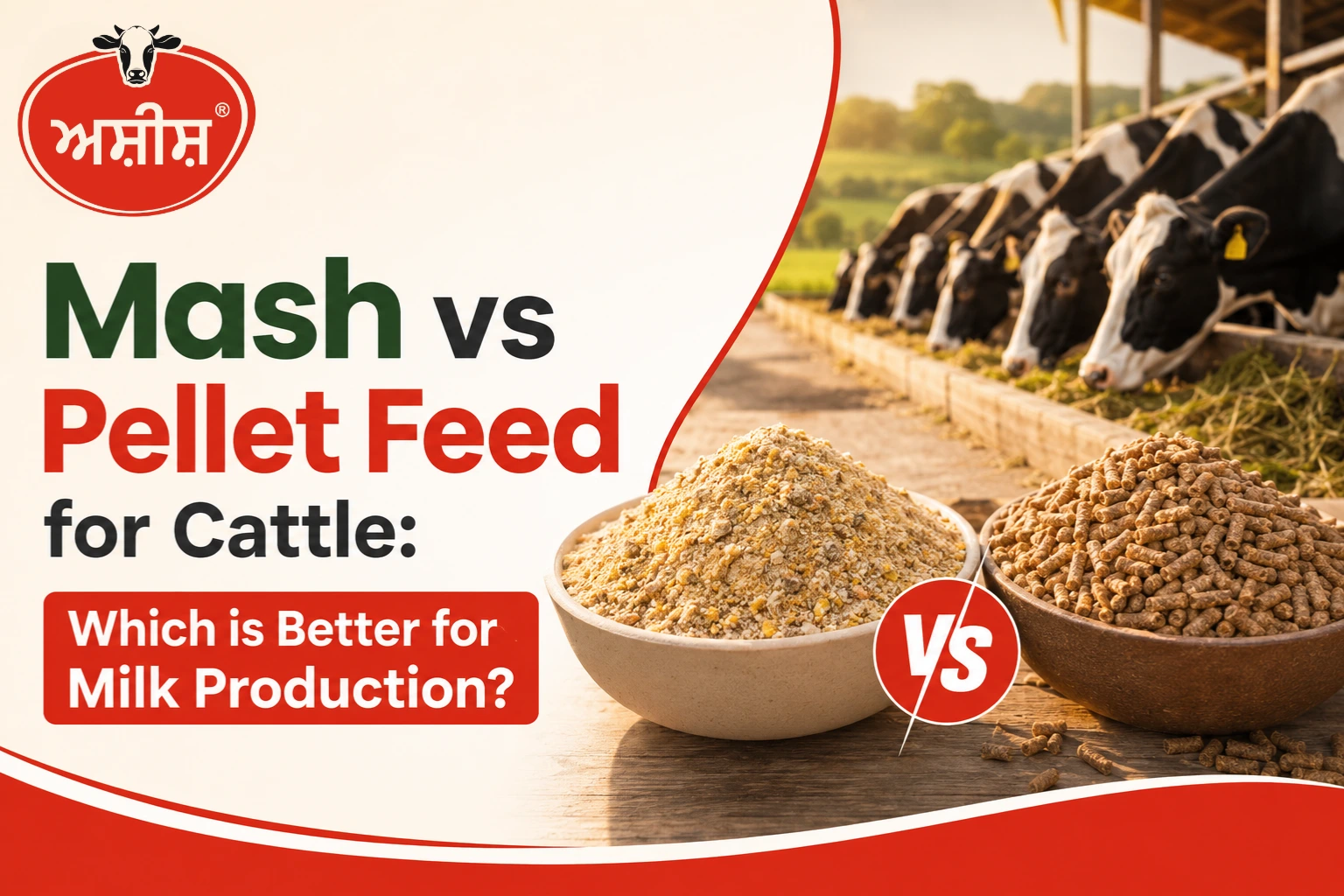
Choosing the right cattle feed plays a direct role in milk yield, animal health, and overall farm profitability. Many dairy farmers in Punjab and across India often get confused between mash feed and pellet feed. Both are widely used by every major feed manufacturer, but the real question is — which one actually works better for your animals?
In this guide, we’ll break down the difference in a simple, practical way so you can decide what’s best for your dairy setup. We’ll also look at how a reliable cattle feed company in Punjab like Ashish Cattle Feed designs both mash and pellet options based on milk production levels.
What is Mash Feed?
Mash feed is a loose, powdered form of concentrated feed made by mixing grains, oil cakes, minerals, and other nutrients. It is one of the most commonly used forms of indian cattle feed, especially among traditional dairy farmers.
Key Features of Mash Feed:
- Easy to mix with dry fodder (bhusa) or green fodder (chara)
- Cost-effective compared to pellets
- Suitable for small dairy farms
- Flexible feeding method (can be used in TMR)
Mash feed is widely preferred by many cattle feed manufacturers in India because of its simplicity and ease of production.
What is Pellet Feed?
Pellet feed is made by compressing the same ingredients of mash into small, solid pellets. This process ensures that every bite your animal eats is nutritionally balanced.
Key Features of Pellet Feed:
- No ingredient separation (uniform nutrition)
- Better digestion and absorption
- Less feed wastage
- Improved milk yield potential
Pellet feed is becoming increasingly popular among modern dairy farmers, especially those aiming for higher productivity.
Mash vs Pellet Feed: Key Differences
Let’s compare both in a practical way:
1. Nutrition Consistency
- Mash Feed: Animals can pick and choose ingredients → uneven nutrition
- Pellet Feed: Every pellet has complete nutrition → better results
Winner: Pellet Feed
2. Milk Production Impact
- Mash Feed: Good for maintaining milk production
- Pellet Feed: Better for increasing milk yield
Winner: Pellet Feed
3. Digestibility
- Mash Feed: Slightly slower digestion
- Pellet Feed: Easier digestion due to processing
Winner: Pellet Feed
4. Cost Factor
- Mash Feed: More affordable
- Pellet Feed: Slightly higher cost but better returns
Winner: Depends on your budget
5. Feed Wastage
- Mash Feed: More wastage possible
- Pellet Feed: Minimal wastage
Winner: Pellet Feed
Which Feed is Better for Milk Production?
If your goal is maximum milk production, pellet feed generally performs better. However, mash feed is still a strong option for farmers who want a balanced and cost-effective feeding solution.
The right choice depends on:
- Your animal’s milk yield
- Your feeding system
- Your budget
Ashish Cattle Feed: Trusted Choice in Punjab
When it comes to choosing a reliable cattle feed manufacturer, quality and consistency matter the most. Ashish Cattle Feed has built a strong reputation as one of the trusted cattle feed manufacturers in India, especially for dairy farmers in Punjab.
Their products are designed to suit different milk production levels, ensuring that every farmer gets the right nutrition for their animals.
Ashish 8000 Mash (For 10–12 Litres Milk Yield)
This feed is specially formulated for low milk-yielding animals, making it ideal for farmers who want stable performance without increasing feeding costs.
Why Choose Ashish 8000 Mash?
- Supports consistent milk production
- Improves milk quality and fat percentage
- Maintains animal health and body condition
Nutritional Value:
- Crude Protein: 18%
- Crude Fat: 3.5%
- Fibre: 10%
- Moisture: 10%
- A.I.A: 4%
This product is perfect for farmers searching for cow cattle feed that delivers reliable results without complexity.
Ashish 8000 Pellet (For 12–18 Litres Milk Yield)
For farmers aiming to improve milk production, pellet feed becomes a smarter choice. Ashish 8000 Pellet is designed for medium-yield animals and offers enhanced nutrition.
Why Choose Ashish 8000 Pellet?
- Higher protein for better milk yield
- Fortified with minerals and yeast culture
- Better digestion and nutrient absorption
Nutritional Value:
- Crude Protein: 22%
- Crude Fat: 3.5%
- Fibre: 10%
- Moisture: 10%
- A.I.A: 4%
This makes it a strong option for farmers looking for concentrated feed that delivers faster and visible results.
Seasonal Feeding Tip (Important for Punjab Farmers)
During summer, animals often eat less due to heat stress. That’s why choosing the best food for cow in summer becomes crucial.
Pellet feed can be more beneficial in summer because:
- It is easier to consume
- Provides dense nutrition in smaller quantity
- Helps maintain milk yield even in heat
You can also combine it with green fodder and plenty of clean water for better results.
How to Choose the Right Feed for Your Farm
Here’s a simple guide:
- If your animal gives 10–12 litres/day → Go with mash
- If your animal gives 12–18 litres/day → Choose pellet
- If your goal is increase in milk yield → Pellet is better
- If your goal is cost control → Mash works well
Local Availability and Practical Buying
When it comes to feeding dairy animals, most farmers prefer options that are easily available nearby. It’s not just about convenience — regular supply and freshness also play an important role in maintaining consistent milk production.
In regions like Punjab, where dairy farming is a daily routine, farmers usually rely on trusted local suppliers to avoid delays and sudden feed shortages. Having a dependable source ensures that animals don’t face sudden diet changes, which can affect both health and milk yield.
That’s why many farmers stick to feed brands that are consistently available in their area and have already shown reliable results over time.
Why Choosing the Right Feed Manufacturer Matters
Not all cattle manufacturers in India maintain the same quality standards. A good cattle feed company in Punjab focuses on:
- Proper ingredient sourcing
- Balanced nutrition formulation
- Consistent quality
- Farmer support
Ashish Cattle Feed follows these principles, which is why many farmers trust it for long-term results.
Final Verdict: Mash vs Pellet Feed
There is no “one-size-fits-all” answer.
- Mash Feed → Best for maintenance and affordability
- Pellet Feed → Best for higher milk production and efficiency
For best results, many farmers even use a combination approach based on animal needs.
Conclusion
Choosing between mash and pellet feed is not about which is better overall — it’s about what works best for your animals.
If you are focused on improving milk yield and efficiency, pellet feed is a smart investment. If you want a simple and cost-effective feeding solution, mash feed still delivers solid results.
By selecting a trusted cattle feed in Ludhiana like Ashish Cattle Feed, you ensure that your animals get the right nutrition — and your dairy business keeps growing.